Material
How Many Types of Engineered Wood Flooring Are There? (3 Core Structures Explained)
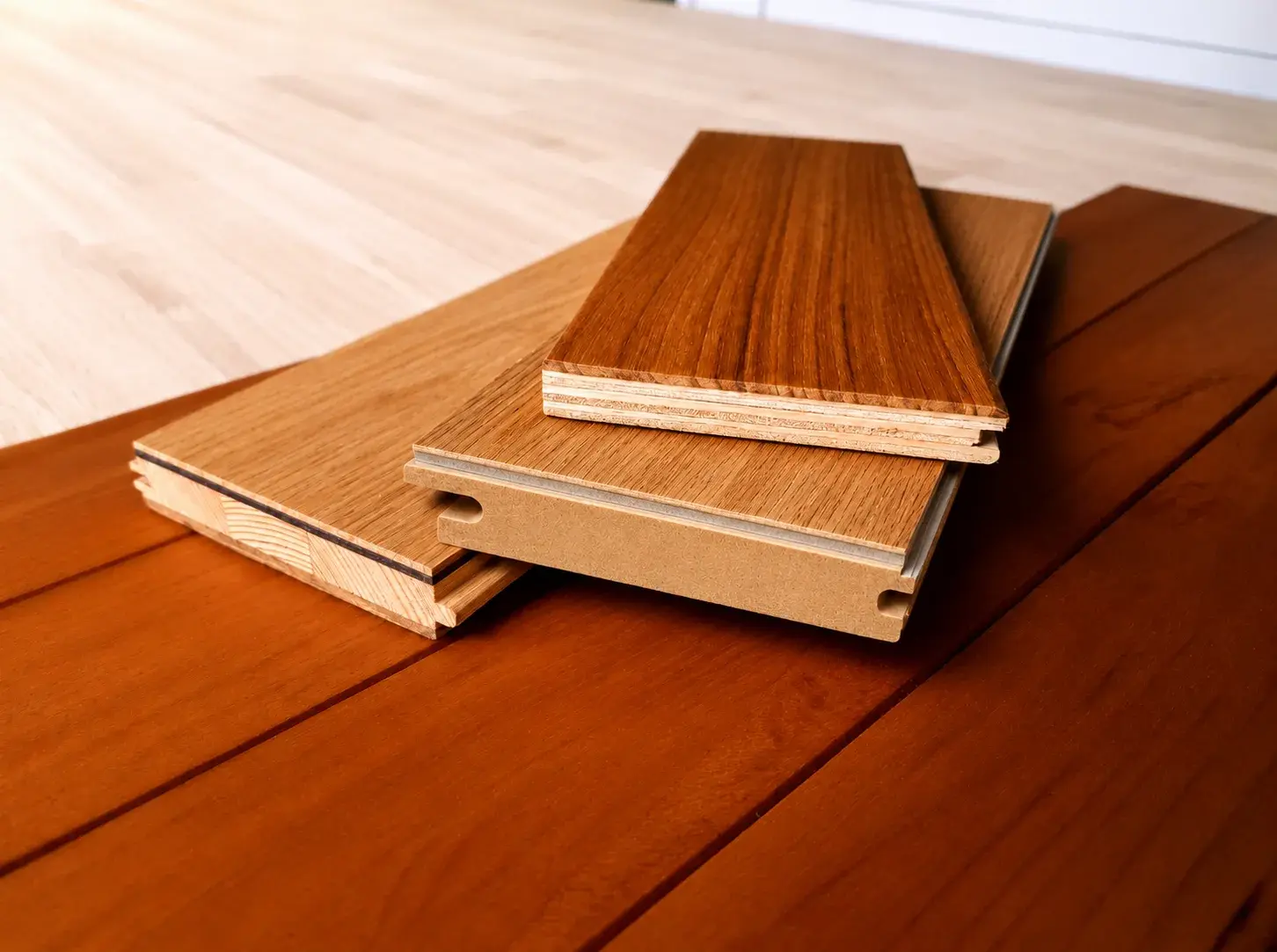
Before choosing wood flooring for your home, it helps to know what engineered wood actually is. Simply put, engineered wood flooring is made of real wood layers bonded together, topped with a real hardwood veneer—such as Teak or Oak—and finished with a stabilizing backing layer underneath.
Many people assume all engineered wood is built the exact same way, but there are actually 3 main types based on their core structure. Understanding how each one is constructed will help you pick the right floor for your lifestyle and space.
1Multi-Ply Core (Plywood Core)
This is the most common and widely recognized type of engineered wood flooring.
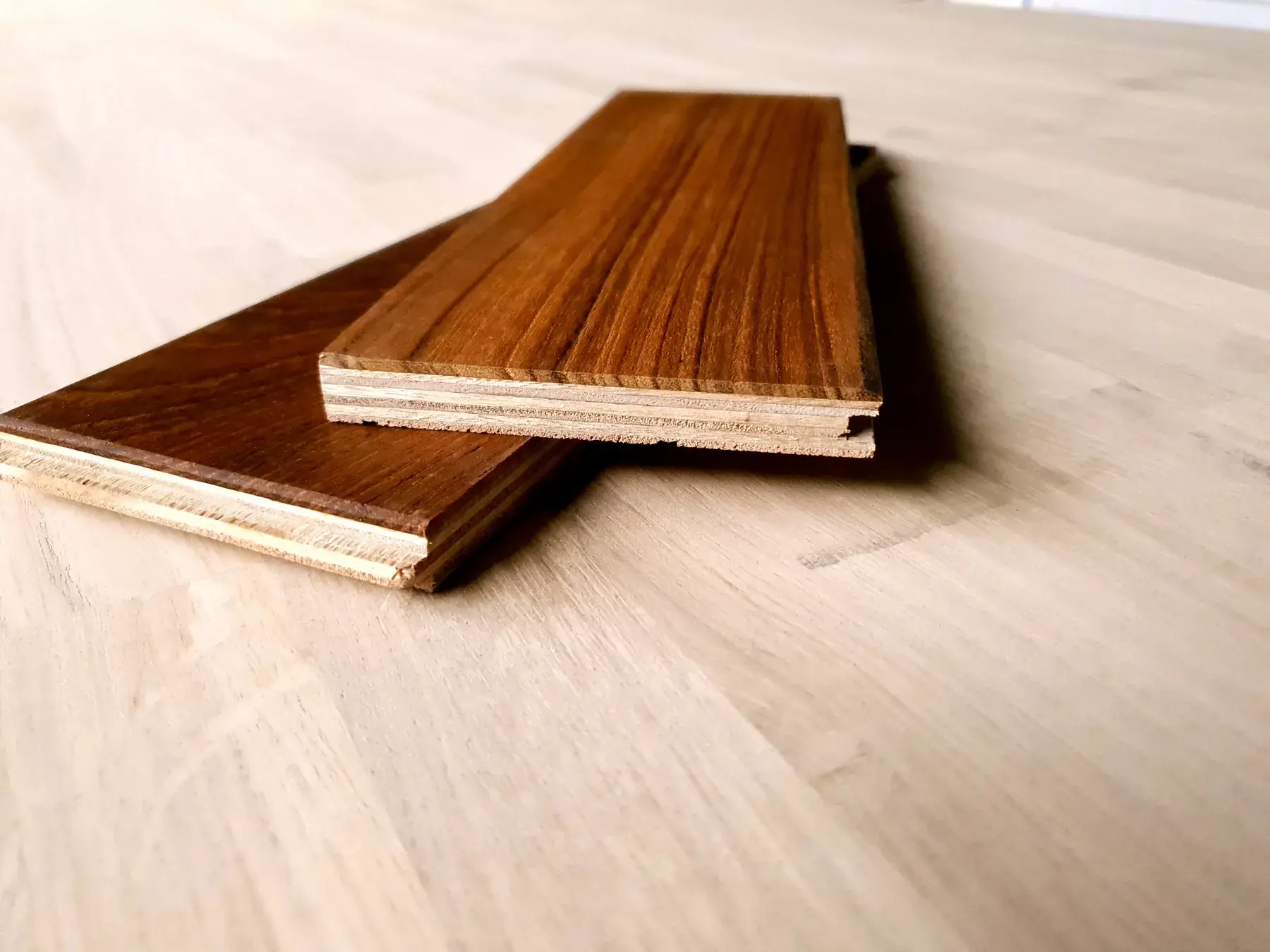
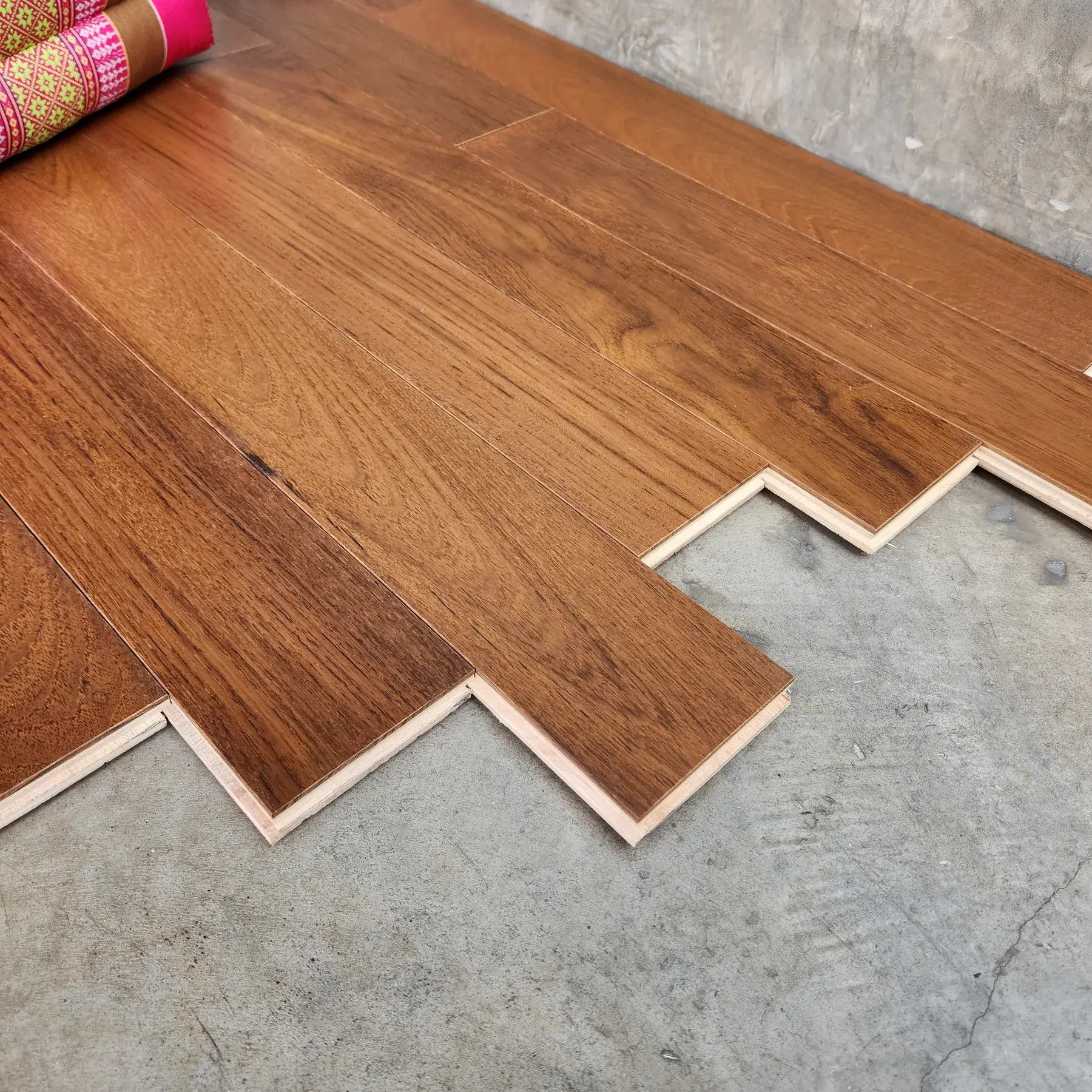
- How it’s made
- Multiple thin layers of wood are stacked and cross-grained at 90-degree angles to one another.
- Key benefits
- That 90-degree cross-layer construction minimizes expansion and contraction, giving the plank exceptional strength and dimensional stability.
- Best for
- Spaces with fluctuating humidity (like tropical climates) and extra-wide plank designs that need extra structural support to prevent warping.
2HDF Core (High-Density Fiberboard)
While HDF is famously used as the base for standard laminate flooring (which uses a printed wood-grain film on top), true HDF-core engineered wood replaces that printed film with a genuine hardwood veneer on the surface.
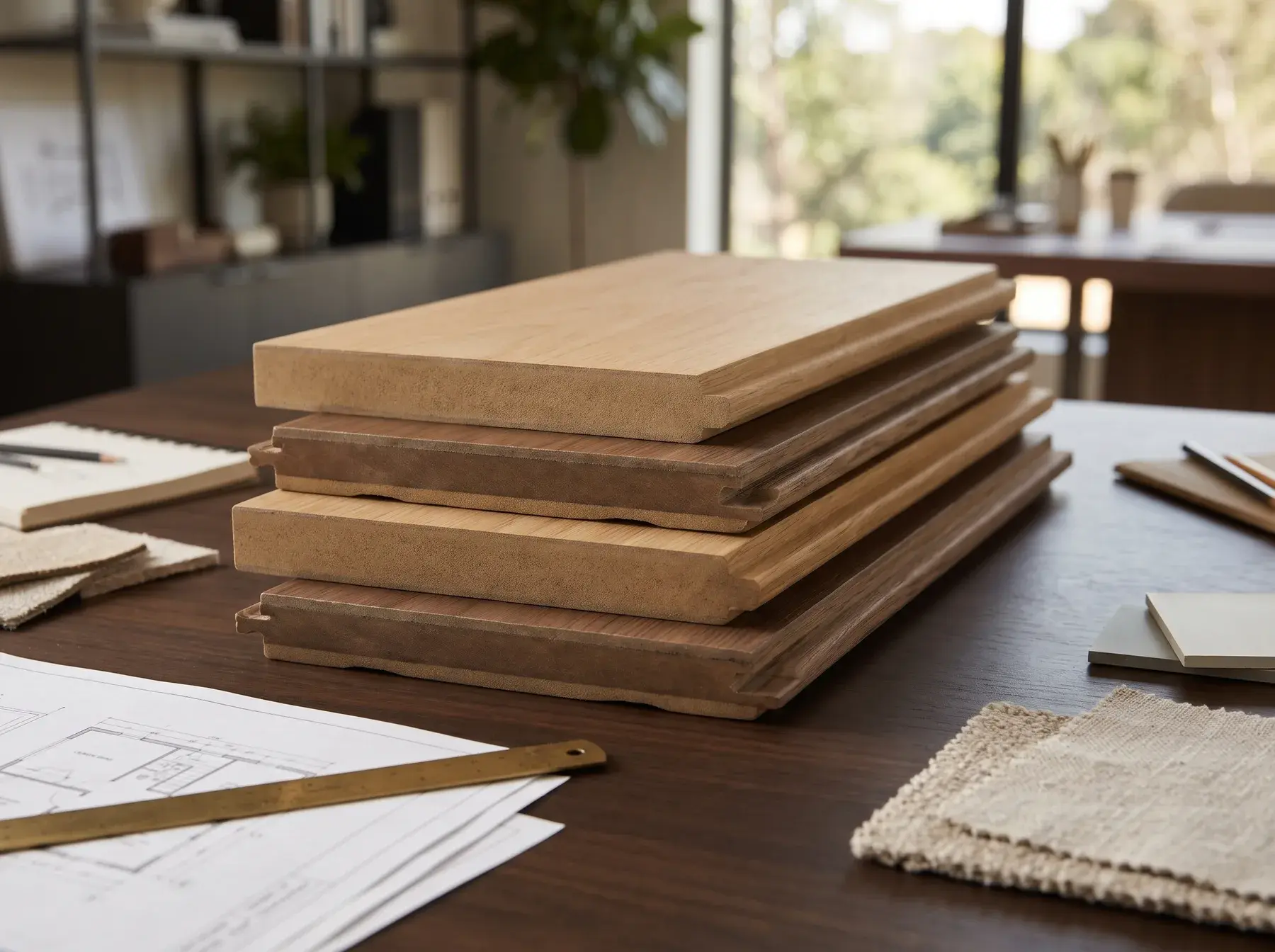 Illustration
- How it’s made
- A dense, compressed fiberboard core paired with a real wood veneer top layer.
- Key benefits
- You still get the authentic look and natural feel of real wood underfoot, combined with the high impact and dent resistance of an HDF core—often at a more accessible price point than multi-ply boards.
- Best for
- High-traffic areas such as kids’ playrooms, pet-friendly rooms, or busy family living zones.
33-Layer Solid Wood Core
Popular across Europe and parts of North America, this style takes advantage of abundant local softwood resources—most commonly Pine.
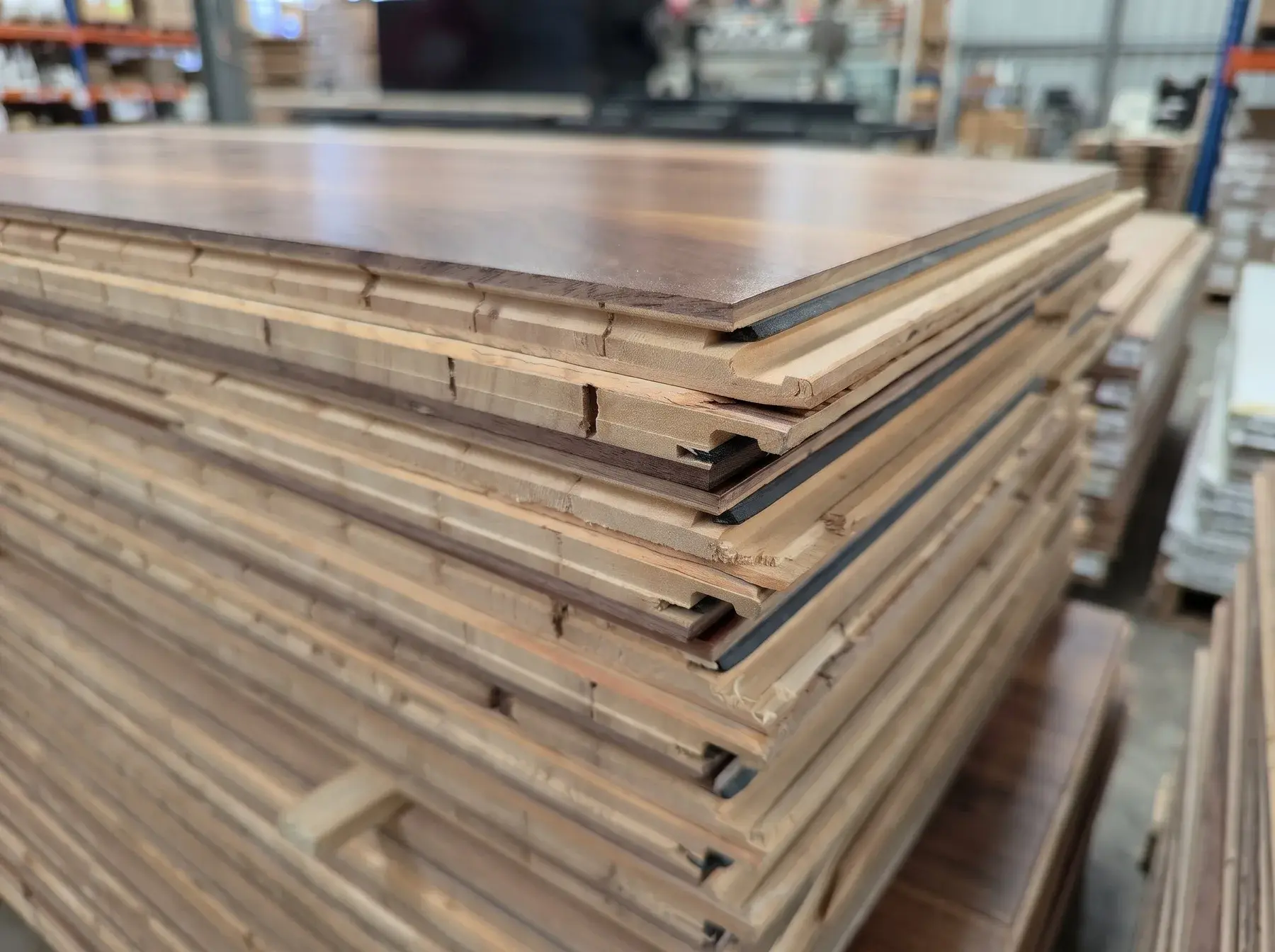
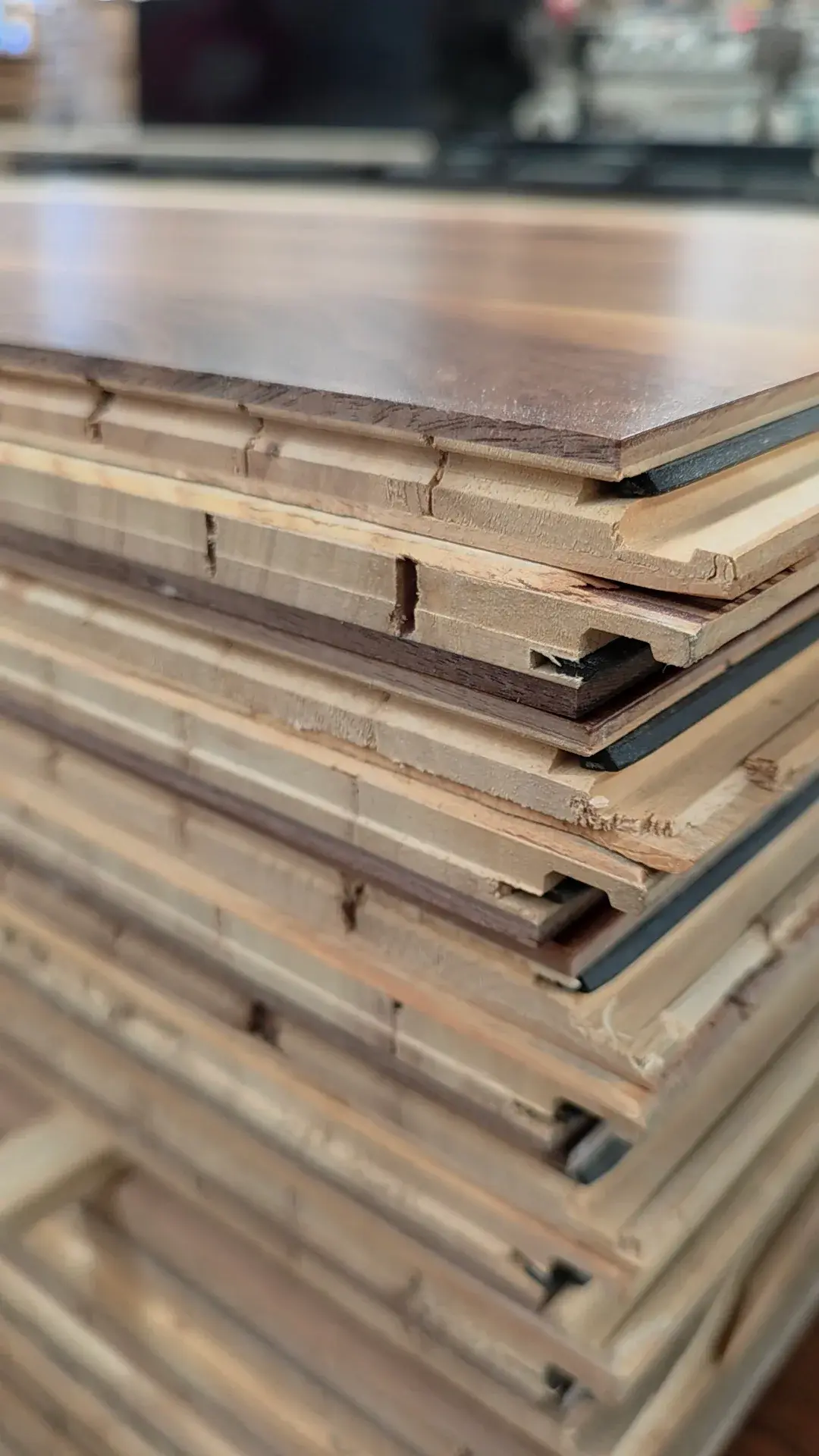
- How it’s made
- It consists of three distinct layers: a real hardwood veneer on top (like Oak or Teak), a thin pine veneer backing on the bottom, and a middle core made of short pine strips laid crosswise along the length of the plank.
- Key benefits
- Because pine is locally abundant in Western markets, 3-layer boards are often slightly more budget-friendly than multi-ply engineered flooring while offering a solid wood feel.
- Things to keep in mind
- Suitable for general interior decoration, though its resistance to expansion and contraction is slightly lower compared to multi-ply or HDF cores.
Which Type Is Right for Your Home?
Now that you know engineered wood isn't limited to just plywood cores, you can match the structure to your room's exact needs—whether you need moisture stability for wide planks, dent resistance for pets and kids, or a classic 3-layer build.