Material
How Much Carbon Can Your Wood Floor Actually Lock Away? (The 1 Sq.M. Rule)
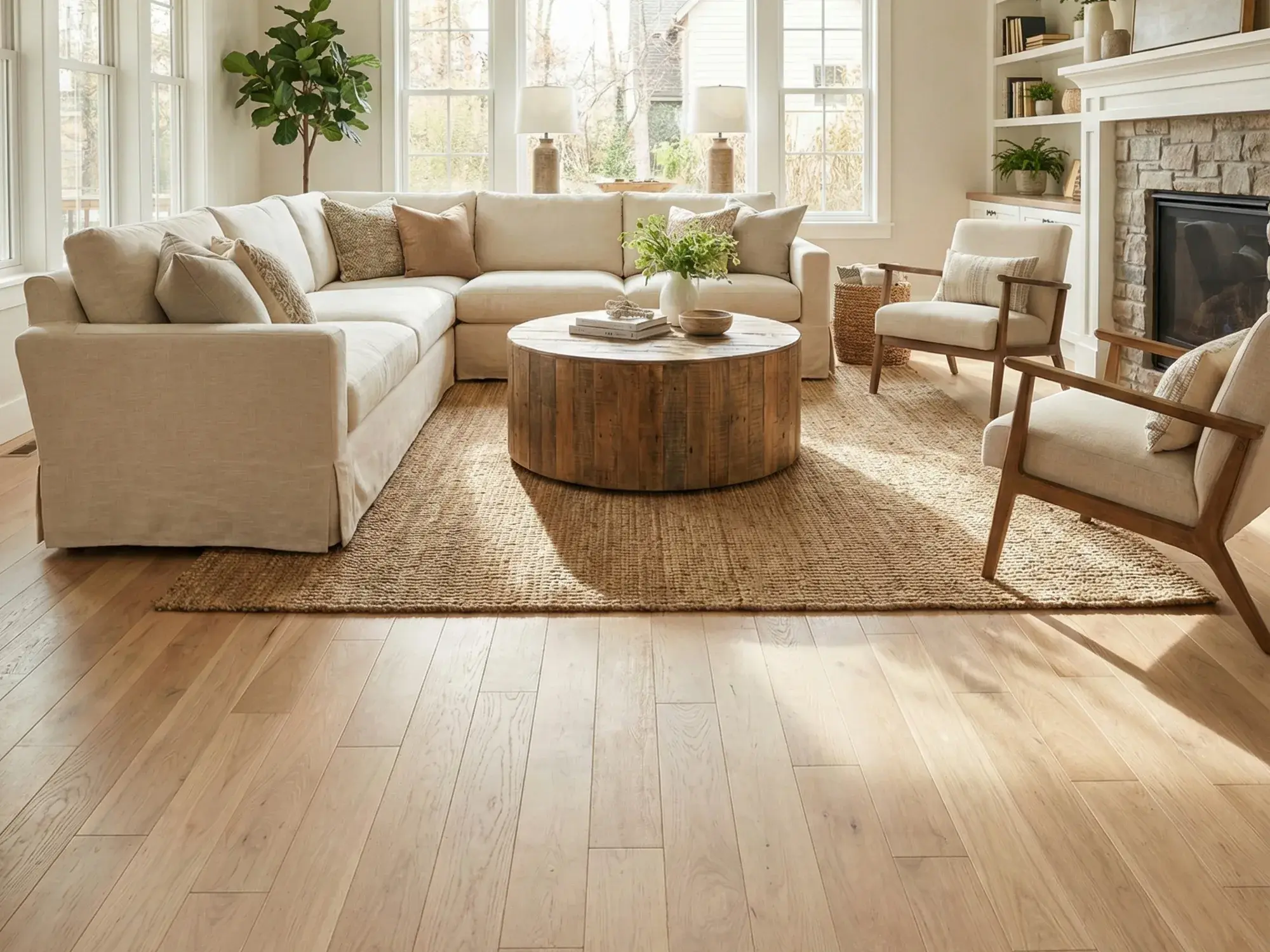 Made with AI
Trying to decorate sustainably can sometimes feel overwhelming—like you have to sacrifice the cozy, stylish look you actually want. Good news: real wood does the heavy lifting for you. Unlike vinyl or plastic lookalikes, real timber secretly acts like a "carbon bank" right under your feet.
1A Quick Glimpse Into Wood as a "Carbon Bank"
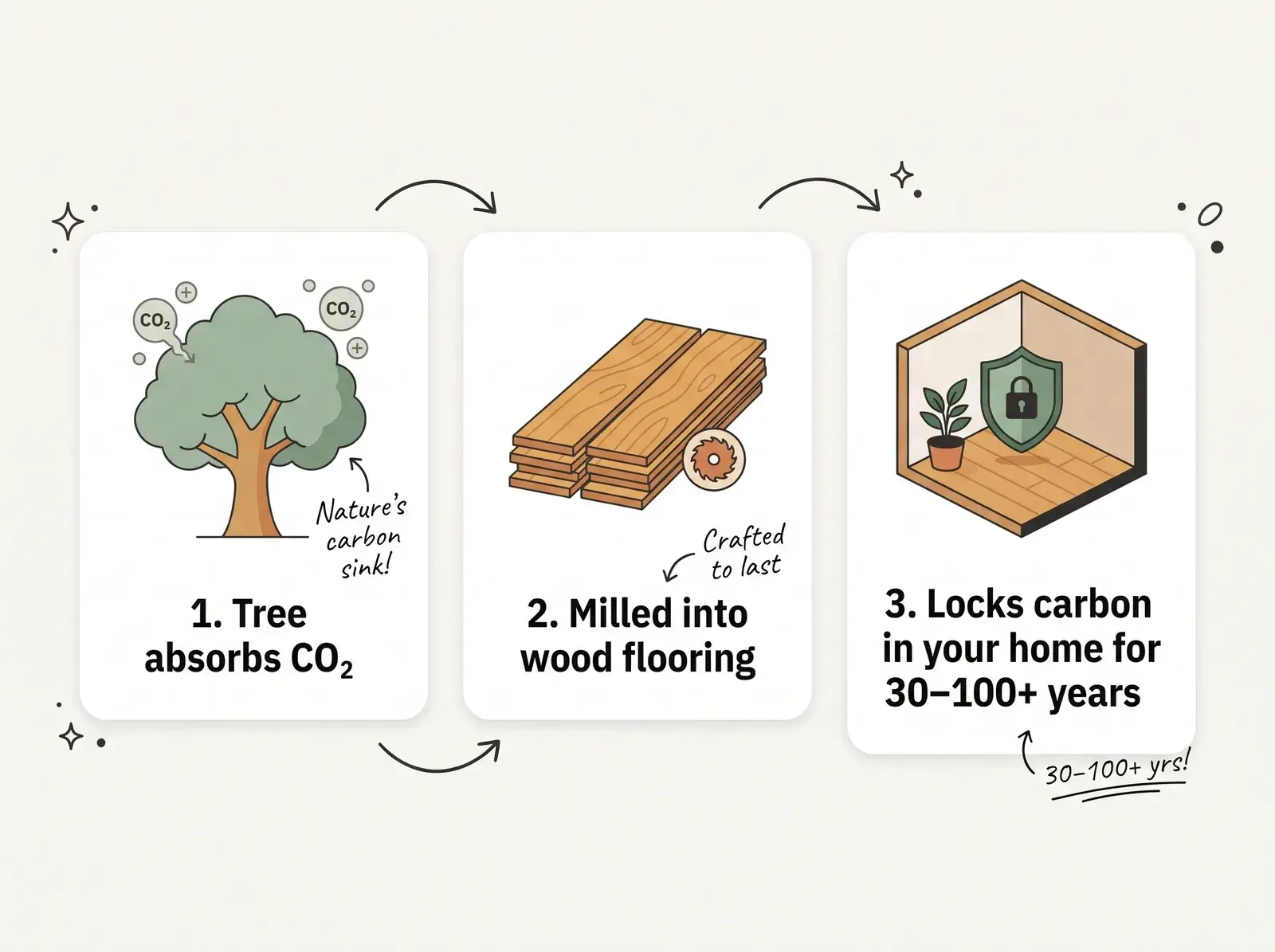
Here is the coolest thing about real wood: as a tree grows, it breathes in carbon dioxide (CO₂) from the atmosphere and stores pure carbon inside its trunk. According to the UN’s Food and Agriculture Organization (FAO), dry wood is roughly 50% carbon by weight—meaning one cubic meter of timber traps about one full ton of CO₂.
When that timber is milled into your floor, dining table, or wall panels instead of rotting or burning in a forest, that carbon stays locked inside your home for 30, 50, or even 100+ years. (We’ll dive even deeper into how forest carbon credits and the full "carbon bank" ecosystem work in an upcoming post—for now, let’s look at what happens right inside your room!)
 Made with AI
2The Easy Per-Square-Meter Cheat Sheet
You don’t need a massive wooden house to make a real difference. Using standard 12 mm thick engineered wood flooring, here is the super-simple formula you can use for any room:
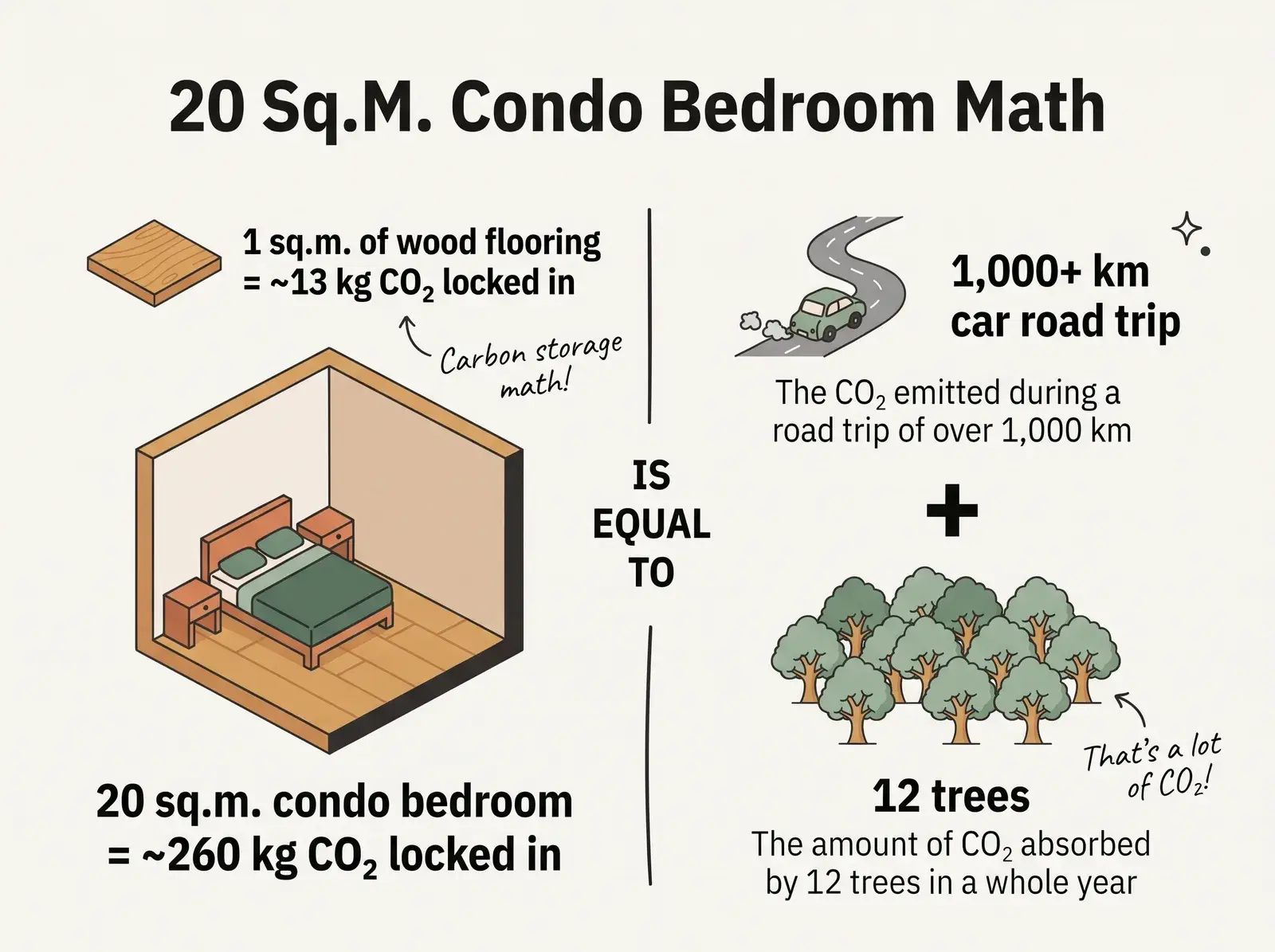
- 1 sq.m. of 12 mm wood flooring = roughly 12 to 13 kg of CO₂ locked away under your feet.
Want to test it on a real space? Take a cozy 20 sq.m. condo bedroom:
- 20 sq.m. × 13 kg ≈ 260 kg of CO₂ stored right beneath your bed.
To put 260 kg of CO₂ into perspective, that single bedroom floor holds roughly the same amount of carbon as:
- Driving a standard gas car over 1,000 km (about a road trip from Bangkok to Chiang Mai and halfway back!)
- What 12 mature trees absorb over an entire year
 Made with AI
3Why Faux Wood Doesn’t Count
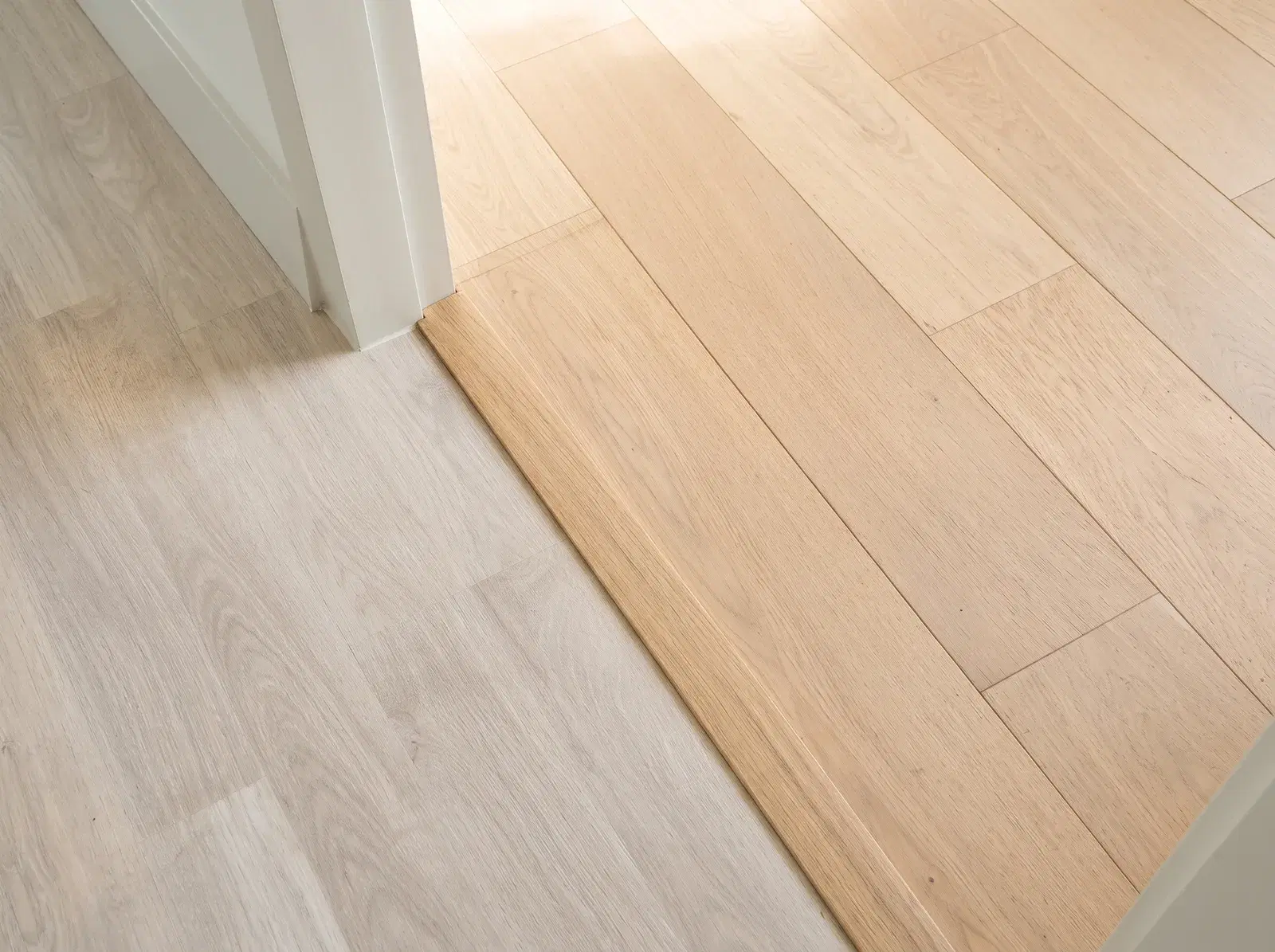
It’s easy to assume buying plastic "wood-look" floors (like vinyl or SPC) saves trees. In reality, synthetic floors are made from fossil fuels, store zero carbon, and can’t be sanded down and refreshed when they scratch—meaning they usually end up in a landfill after 10–15 years. Real wood, meanwhile, can be lightly refinished and loved for decades while younger trees in responsibly managed forests grow back to capture even more CO₂.
43 Easy Ways to Bring "Good-Karma" Wood Home
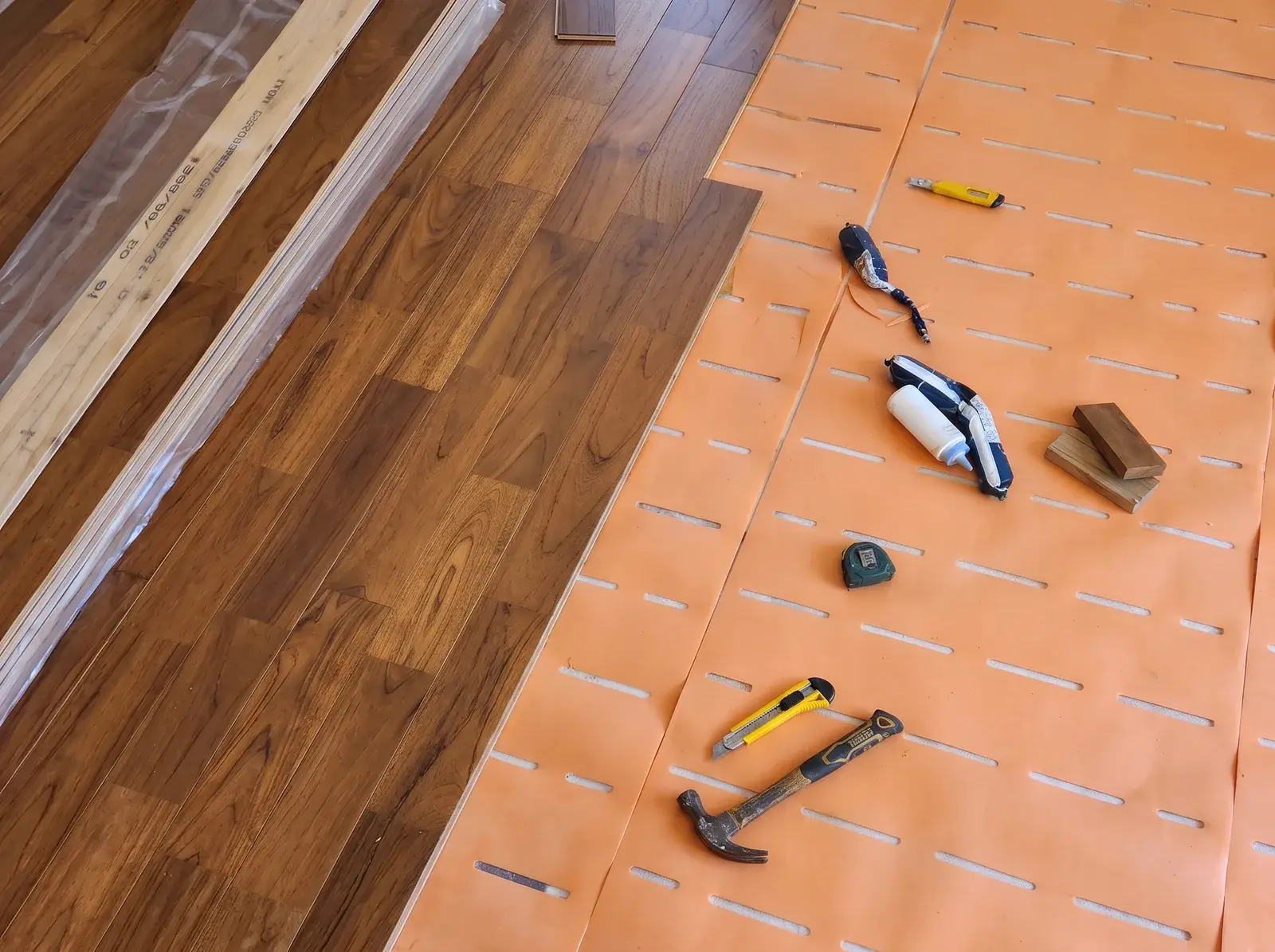
- Pick floors built to last: Solid wood or multi-layer engineered wood can be refreshed years down the road instead of ripped out.
- Love the natural quirks: Wood with subtle knots, natural grain variation, or finger-jointed panels uses way more of every log—meaning less waste and way more personality.
- Preview before you commit: Testing wood tones in your room first saves you from costly mistakes and wasted materials.
Sources
- Food and Agriculture Organization of the United Nations (FAO) — Forestry for a Low-Carbon Future (FAO Forestry Paper 177)
- Intergovernmental Panel on Climate Change (IPCC) — Guidelines for National Greenhouse Gas Inventories (Volume 4, Chapter 12: Harvested Wood Products)
- USDA Forest Service — Wood Handbook: Wood as an Engineering Material (FPL-GTR-282)